Online Math Training for Children Ages 4–9Like you, I have also wondered about my child's future in this ever-increasing competitive world…

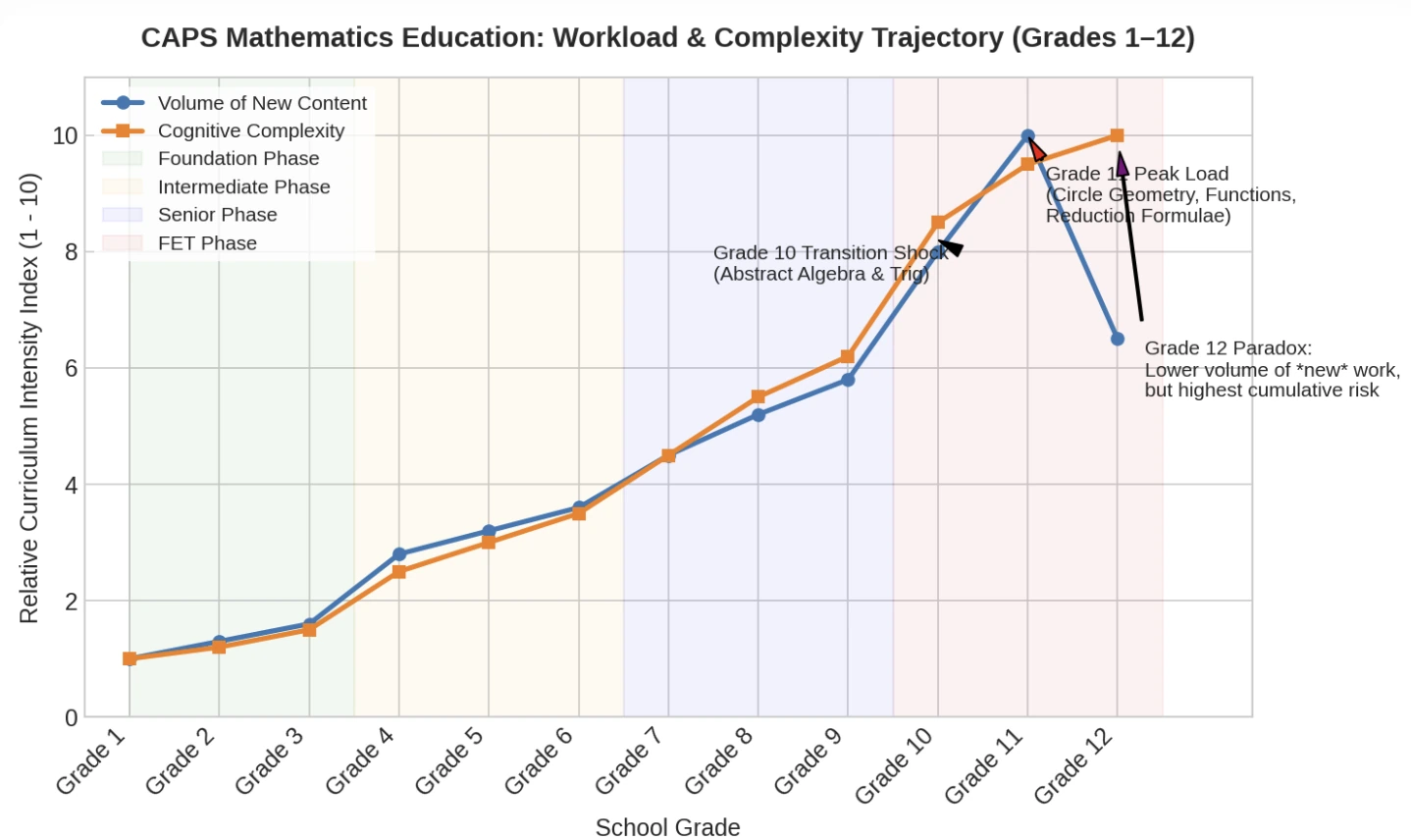
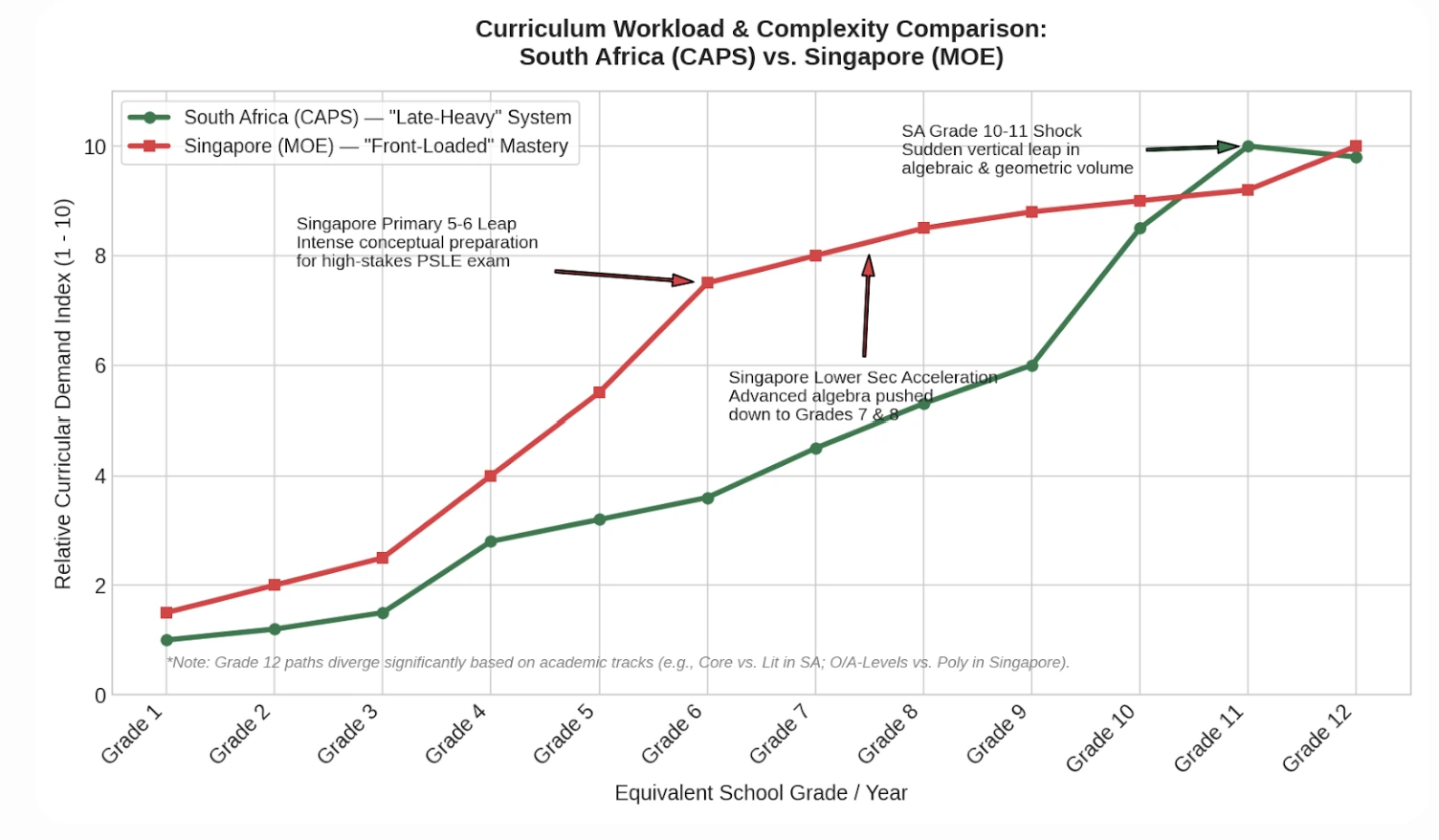
Research is providing empirical evidence that we are wasting the best learning years of a child's life between the ages of 4 to 9. Schooling starts around age 6 with a very slow math progression... Missing the sweet spot; resulting in 92% of children struggling with mathematics in their schooling journey; and unfortunately causing even our studious kids to lose out on university opportunities and falling behind global peers.

Congratulations parent, you are now on the best route to give your child a 1 to 2 year, minimum advantage over their peers. We will introduce you to a tried and tested technology originating in the East that will not only give your child that advantage; But will also catapult their cognitive and reasoning ability to unlock their “genius” that permeates through other STEM subjects.
Let us show you how..
See if your child qualifies
- Green Shoots Top 5
- NASA-Inspired
- Ages 4–9
- Small group of 5
- Live Human Trainer
Beyond Memorization: The MathXL Triad
Fascinated with Early Childhood Development. He ensured that his kids were exposed to top-quality pre-school experiences. He ensured that they had exposure to the Montessori program teachings, and was able to see strong alignment between what he had taught and the concepts being applied in the Montessori program; which guided them towards order and precision. They learned the quantity and sensation, volume, and texture of numbers which started to create a permanent mental map of quantity. This built the foundation of good "Concrete" tools.
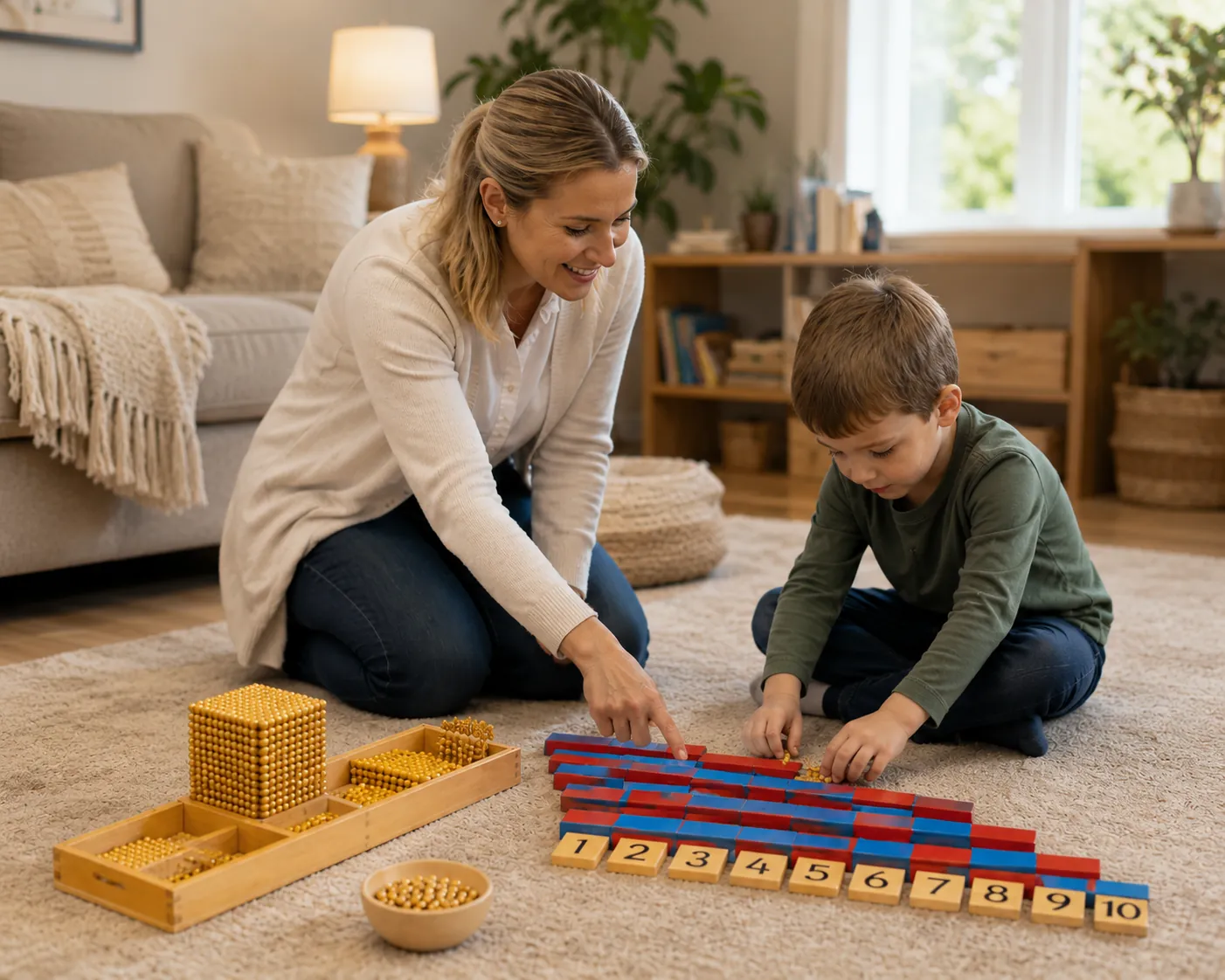
Following the journey to abstract thinking, his research led him to the CPA Mastery Model. The CPA Framework was adopted by the highly successful and now famous Singapore Math framework. If the outcome you seek is a child with a strong relationship with numbers and true mastery, global research suggests the CPA Approach. So mystery solved: those human calculators were not born, they were manufactured!
He could see immediate results and how quickly the children took to it.
To ensure mastery was achieved, not just letting the ink dry but actually having cemented mastery he applied a Layered Learning approach - Master one single concept until it is automatic. This was done in three phases: crawl, walk, and run. The technology emphasises that slow, layered mastery ("slow is fast") and practicing under duress are the keys to professional-grade knowledge… We later discovered that elite astronaut-training programmes follow a very similar approach. See for yourself… Click the link [04:26] [07:45].
Concrete → Pictorial → Abstract
Concrete
Feel the weight of 5 blocks
Pictorial
See it as a diagram
Abstract
Reason with the symbol
The Key Principle
Understanding first → then Representation → then Fluency → then Application
NOT
Practice → practice → practice → hope for understanding
Why This Math Programme Works
Scientific research by László Polgár, a psychologist in 1965, publicly announced he would "manufacture geniuses" from his unborn children to prove that biology is not destiny [00:11]. Polgár proved that genius is a result of a specific "manufacturing process" (with the "manufacturing window" starting at age 4), rather than innate gifts. He concluded that intellectuals shared two traits: early specialization and intensive practice. He detailed this in his book, Bring Up Genius! (Hungarian: Nevelj zsenit!).
A genius is not born, a genius is educated and trained... When a child is born healthy, it is a potential genius.
— László Polgár
With this program's applied technology mediocrity, or not fulfilling your true potential, has become a choice …the choice is yours.
The Math Training Programme Framework
We don't "drill" children. We build them. We combine the world's most effective systems into one "Super-System" designed for ages 4–9; the "manufacturing window".
- Pillar 01
Online Contact Sessions
Based on our initial assessment with your child and you as the parent to determine the aspirations you have for your little treasure, you will then select a program for them to participate in. They will be assigned to a small group of 5 students with similar goals. So, to be clear, this is not a classroom-type of environment where someone gets the front seat and someone else has to be in the back row. Everyone gets a front seat! The group is designed more like you have in an MBA class, a learning syndicate! The group becomes a motivation and encouragement for each other. They also challenge each other, especially in the abstract thinking phase of the program, where, for example, we ask, "Who Solved this problem differently and got to the same answer?" This explores critical thinking from all angles.
- Pillar 02
Live Human Trainer
Now this is where the magic happens; every group is led by a trainer who interacts live with the children online. Why? Because it's how humans learn effectively. We crave human interaction we learn best from immediate feedback especially in the early development stage, we can't be left alone with a pen and paper thinking we're going to achieve mastery. The trainer checks the absorption and progress rate of each child so that no one gets left behind and every child grows at their natural pace. These contact sessions run for 20 minutes; about the attention span of a child in foundation phase. [BTW, Why called "trainer"? for the same reason that athletes excel with a trainer as opposed to trying their own thing… like I said this is where the magic happens… you get explosive and sustained growth… now you're on your path to achieving mastery.
- Pillar 03
High performance App technology built for unstoppable success
As your child develops the trainer will start introducing individualised training exercises via the app. Your subscription to the app allows you 24 hour access for the little one to, between contact sessions, do the exercises at their own pace. They will also have access to learning materials, videos and work exercises. Your child will receive immediate feedback (interactive) during the exercises and the progress is automatically fed through to the trainer.
Why Our Math Training Is Online
It is a deliberate advantage designed for deeper, more consistent learning. In a focused home environment, children are free from the social pressure, noise, and distraction often found in physical classrooms, allowing them to engage more calmly and confidently. Each session is intentionally structured, with small groups ensuring every child is seen, heard, and guided in real time; something that is often diluted in larger, in-person settings. Most importantly, learning happens where it matters most; at home, where parents can observe progress, reinforce habits, and stay closely connected to their child's development. Online also eliminates the psychological "crutch" that learning only happens in a classroom setting..."When I go to school". By mastering complex concepts in a digital environment, your child is simultaneously developing the "Digital Fluency" required for the modern world… Getting ready for the future digital classroom. Practically, your child arrives ready to engage, not suffering from travel fatigue and scheduling anxiety due to the lost time in the car… it just takes 20 minutes no more.
And of course, reality bites, it makes the program much more affordable.
Also see the Q&A section for a more detailed analysis.
PROGRAM SUMMARY: INTEGRATED MASTERY MODEL
CPA Mastery
Your child feels the "quantity and sensation" of 5 blocks before seeing the symbol "5".
They develop a permanent "mental map" of numbers, not just a memory of a symbol.
Crawl, Walk, Run approach
We master one layer until it's automatic "boring" before adding complexity.
This burns information into long-term memory, eliminating the "forgetting curve."
Number Talks
Instead of silent worksheets, we ask "How many ways can you make 10?"
Your child becomes a flexible thinker who can "decompose" problems…the key to high school Algebra.
A live, guided learning system that builds deep understanding, lasting confidence, and advanced problem-solving; long before the average child even begin to grasp it.
Proven over 10+ years • Built on global research
WHAT THIS PROGRAM PRODUCES:
A child who:
- 01
In Foundation Phase:
- Understands why math works
- Can represent problems in multiple ways
- Has strong number sense (core predictor of success)
- Shows exceptional strength in mental math (necessary for critical thinking)
- 02
In Intermediate Phase:
- Handles word problems easily
- Transitions smoothly to abstraction
- Understanding first → then Representation → then Fluency → then Application
- (NOT: Practice → practice → practice → hope for understanding)
Higher IQModern research supports our finding that a child can increase their IQ through mathematics by improving cognitive skills like: Critical thinking; Working memory; Logical reasoning (1. Torkel Klingberg 2. Susanne M. Jaeggi)
- 03
In High School:
- Excels in algebra (because structure is understood)
- Avoids "math breakdown" (common globally)
- 04
At University:
- Strong problem-solving ability
- Can generalize and apply knowledge
- Performs above average in STEM pathways
- 05
The Workplace:
let's be honest most kids today have aspirations of studying abroad and working abroad… how do they compete against folks who have mastered CPA in their home countries; they're clearly being selected into Ivy League international universities and sailing into the global workforce with a competitive advantage. Well, now you know your child can, not only compete; but excel globally!

A very important feature of the program is that it produces a much less stressed Mom…
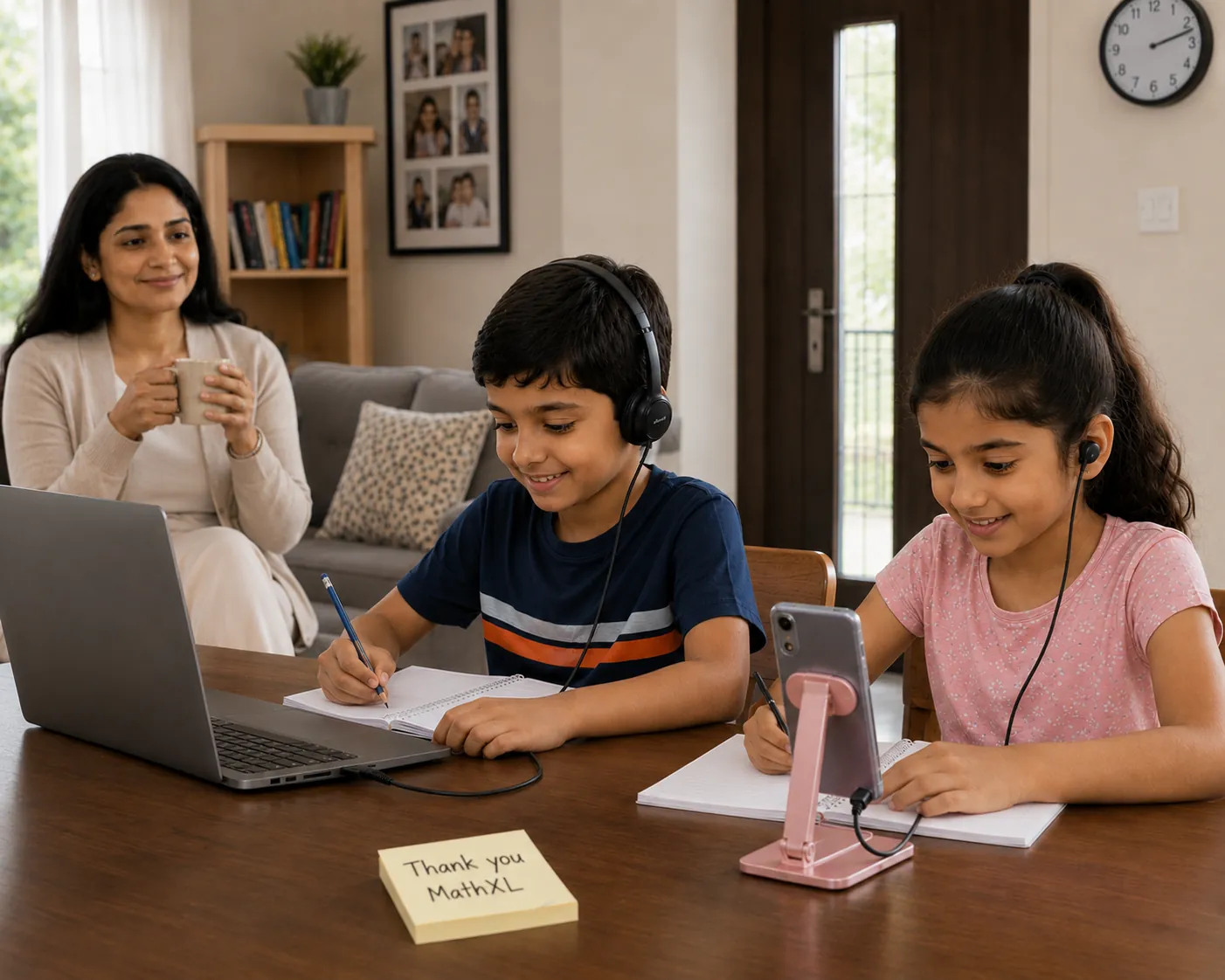
A very important feature of the program is that it produces a much less stressed Mom… The one thing Moms love about the program. It quietly gives you your evenings back. No rushing through traffic, no last-minute "we're going to be late!" stress, and definitely no negotiating with a cold and wet or hot and bothered little one who suddenly doesn't want to leave the house. Instead, you get to stay in your comfort zone, tea in hand, child learning happily, and everything just… flows. You save time, skip the petrol spend, and avoid the daily chaos, while still giving your child the premium learning experience. It's calmer, smarter, and honestly… a bit of a sanity-saver.
A lesson for the price of a cup of coffee.
Choose the weekly rhythm that matches your child's goals. More consistent lessons create faster confidence, stronger problem-solving and better long-term math outcomes.
Confidence Builder
Quickly builds academic confidence, strengthens math foundations, and helps learners move ahead with consistent support.
- Builds academic confidence
- Strengthens math foundations
- Helps learners progress beyond peer-level basics
- Good minimum starting rhythm
Strong Progress
A stronger weekly rhythm that reduces math anxiety, improves persistence, and supports performance in math and science.
- Reduces math anxiety over time
- Supports science subject confidence
- Builds structured thinking
- Encourages persistence with challenging problems
Advanced Growth
Accelerated support for complex problem-solving, mental math, spatial reasoning, and coding-readiness.
- Develops complex problem-solving
- Improves mental math
- Builds spatial and analytical reasoning
- Supports coding and computational thinking readiness
Mastery Track
The fastest route to mastery, designed for strong long-term confidence, competition readiness, and future academic ambition.
- Fastest progress pathway
- Builds advanced mental math
- Supports math competition confidence
- Strengthens all-round academic confidence
- Supports long-term career ambitions in fields like engineering, medicine, accounting and IT
YOUR NEXT STEP
As you have now been following, it has probably become very clear to you that:
It's foundational care. If your Little treasure does not have a good understanding of math and an understanding of numbers in their foundational years, they will remain behind the curve... Rhyming off numbers 1 to 100 or parrot fashion repeat of times tables does not mean you have a relationship with numbers… you have a decent memory at best.
The best chance to improve a young child's cognitive ability is in the early development stages. Age 4 onwards becomes the prime time to build and boost that.
School alone will not give your little treasure the advantage they need to achieve their dreams and to compete in the global world… school's focus is different.
Geniuses can be grown; however, If you do not make use of this manufacturing window, you lose it forever.
Raising an "Average" child has become a Choice!
"THE CALL TO ACTION SECTION"
Are you ready to give your child the best advantage; Being their hero? Do the responsible thing to future proof your little treasure - Call us now to assess if your child is a fit for the program.